
The Changing of the Guard: The 1997 Tour de France in Two Jerseys
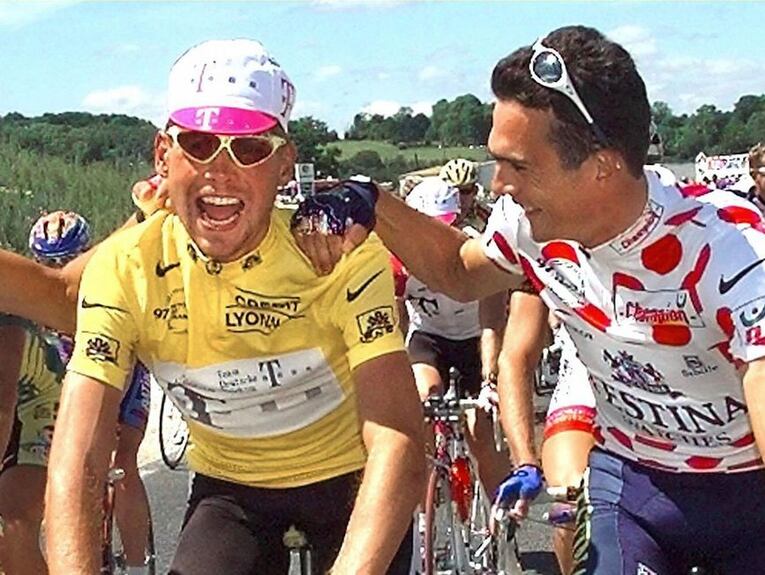
The 1997 Tour de France remains a pivotal chapter in cycling history. It was the year the “Old Guard” was finally overtaken by a new, powerhouse generation. To understand the 1997 Tour is to look at two jerseys that dominated the landscape of the Alps and Pyrenees: Jan Ullrich’s Maillot Jaune and Richard Virenque’s Maillot à Pois.
The Yellow Jersey: Jan Ullrich’s Teutonic Takeover
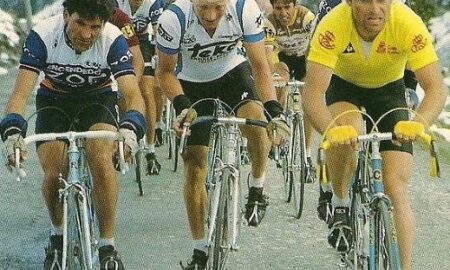
In 1997, a 23-year-old Jan Ullrich from Team Telekom didn’t just win the Yellow Jersey; he redefined how it was worn. Riding with a massive gear and an unshakeable, rhythmic style, Ullrich seized the lead during the tenth stage in the Pyrenees.
His performance on the climb to Andorra-Arcalis is the stuff of legend. While other riders struggled for breath, Ullrich looked like a machine carved from granite, pedaling away from everyone to claim the lead. For the rest of the Tour, that Yellow Jersey seemed glued to his back. He became the first German to win the Tour de France, finishing with a massive lead that signaled the start of a new era in professional cycling.
The King of the Mountains: Richard Virenque’s Alpine Art
While Ullrich represented raw power, Richard Virenque represented the soul of the mountains. Draped in the red-and-white Polka Dot Jersey, Virenque was the darling of the French public.
In 1997, Virenque was at the height of his climbing powers for Team Festina. He wasn’t content to simply win points; he wanted to win the hearts of the fans. Every mountain pass was a stage for his dramatic attacks. He claimed his fourth consecutive King of the Mountains title that year, dancing on the pedals through the clouds, a stark, agile contrast to Ullrich’s heavy-gear dominance.
The Outcome: A Battle of Styles and Substance
The relationship between these two jerseys defined the 1997 outcome. Virenque was Ullrich’s most dangerous challenger, finishing second overall in the general classification.
The Tour became a game of chess played at 2,000 meters. Virenque and his Festina team launched aggressive, tactical strikes in the Alps—most notably on the stage to Courchevel—trying to crack the young German. However, the Yellow Jersey was simply too strong. Ullrich used his incredible time-trialing ability to neutralize Virenque’s mountain raids.
The 1997 Tour concluded with Ullrich in yellow and Virenque in polka dots on the Champs-Élysées. It was a result that balanced the brutal efficiency of the future with the romantic climbing traditions of the past, leaving fans with one of the most visually and competitively stunning Tours of the decade.




Leave a Reply